
Gardening Zones
Gardening Zones
What is A Gardening Zone?
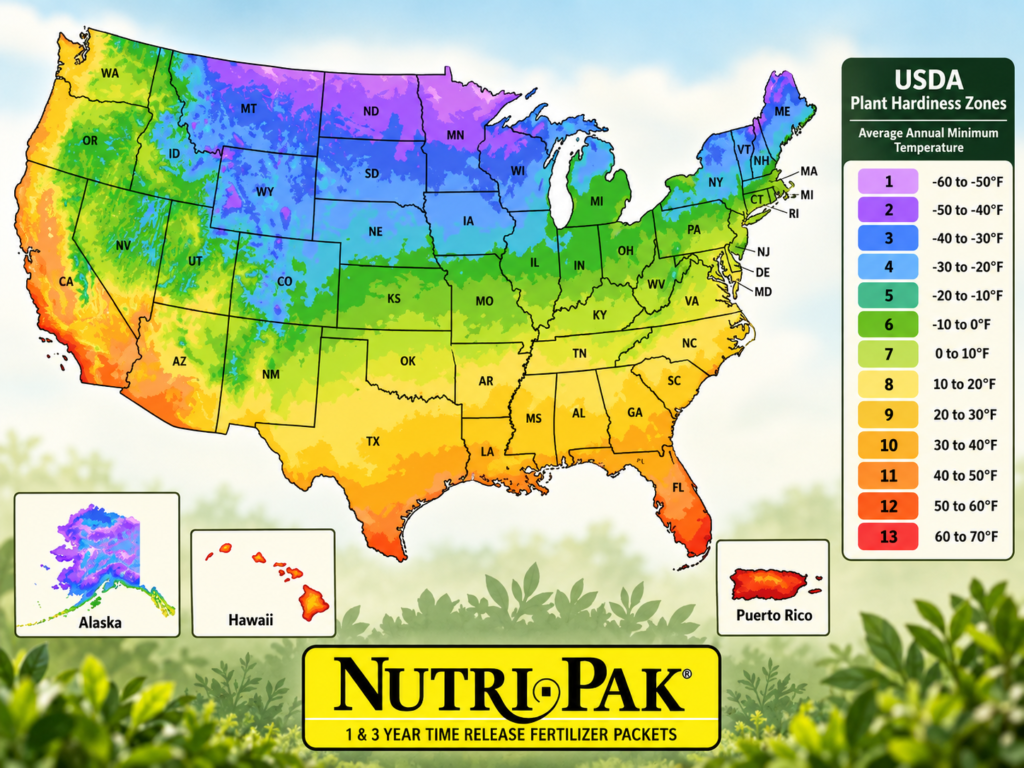
A gardening zone, also known as a USDA Plant Hardiness Zone, is a geographic area classified by its average annual extreme minimum winter temperature. These zones help gardeners determine which trees, shrubs, flowers, and other plants are most likely to survive the winter in their location. The United States is divided into 13 main hardiness zones, with lower numbers representing colder climates and higher numbers representing warmer regions. Understanding your gardening zone can help you choose suitable plants, plan your landscaping, and make informed decisions about seasonal plant care. At Nutri-Pak, we believe that knowing your gardening zone, understanding your soil conditions, and choosing the right fertilizer are important steps toward growing healthy, thriving plants.
Gardening Zone 1: Extreme Cold Climates
Gardening Zone 1 experiences extremely cold temperatures ranging from -60°F to -50°F and is primarily found in northern Alaska and Arctic regions. Only exceptionally cold-hardy plants, such as dwarf birches, native willows, and certain shrubs, can survive these conditions. Nutri-Pak’s 16-8-8 Trees, Shrubs & Evergreens Fertilizer may benefit some of these plants if soil testing reveals nutrient deficiencies. However, fertilization should be limited to the short growing season, and many native plants may not require it. Nutri-Pak’s other fertilizer formulas are generally better suited for warmer climates or controlled indoor growing environments.
States in Gardening Zone 1
- Alaska
Gardening Zone 2: Very Cold Climates
Gardening Zone 2 experiences extremely cold temperatures ranging from -50°F to -40°F and is primarily found in Alaska and parts of northern Canada. Cold-hardy plants such as spruce trees, pine trees, dwarf birches, willows, and certain evergreen shrubs can survive these harsh conditions. Nutri-Pak’s 16-8-8 Trees, Shrubs & Evergreens Fertilizer may benefit these plants when soil testing indicates a need for additional nutrients. Nutri-Pak’s 16-16-16 Fruit, Nut & Flowering Trees Fertilizer may also be suitable for certain cold-hardy flowering trees and shrubs when their nutrient requirements justify it. Fertilization should generally occur during the short active growing season, as excessive nutrients can encourage vulnerable late-season growth. Other Nutri-Pak fertilizers are typically better suited for warmer climates or controlled growing environments.
States in Gardening Zone 2
- Alaska
Gardening Zone 3: Cold Northern Climates
Gardening Zone 3 experiences extremely cold winter temperatures ranging from -40°F to -30°F and is found in parts of Alaska, Montana, North Dakota, Minnesota, Wisconsin, and other northern regions of North America. Cold-hardy plants such as spruce trees, pine trees, fir trees, birch trees, lilacs, and certain flowering shrubs can thrive in these conditions. Nutri-Pak’s 16-8-8 Trees, Shrubs & Evergreens Fertilizer may benefit these plants when soil testing indicates a need for additional nutrients. Nutri-Pak’s 16-16-16 Fruit, Nut & Flowering Trees Fertilizer may also support suitable cold-hardy fruit and flowering trees when their nutrient requirements justify its use. Nutri-Pak’s 15-20-15 Roses & Flowering Plants Fertilizer may be appropriate for certain hardy roses and perennial flowers if additional nutrients are needed. Fertilization is best timed during active growth, avoiding excessive late-season nitrogen that could encourage frost-sensitive growth.
States in Gardening Zone 3
- Alaska
- Minnesota
- North Dakota
- Montana
- Wisconsin
- Maine
- Colorado
- Idaho
- Wyoming
- Utah
Gardening Zone 4: Cold Temperate Climates
Gardening Zone 4 experiences cold winter temperatures ranging from -30°F to -20°F and is found in parts of Minnesota, Wisconsin, Michigan, Montana, North Dakota, South Dakota, and other northern regions of North America. Cold-hardy plants such as maple trees, oak trees, spruce trees, pine trees, arborvitae, lilacs, apple trees, and certain flowering shrubs can thrive in these conditions. Nutri-Pak’s 16-8-8 Trees, Shrubs & Evergreens Fertilizer may benefit these plants when soil testing indicates a need for additional nutrients. Nutri-Pak’s 16-16-16 Fruit, Nut & Flowering Trees Fertilizer may support cold-hardy apple, cherry, and other fruit or flowering trees when appropriate. Nutri-Pak’s 15-20-15 Roses & Flowering Plants Fertilizer may also benefit hardy roses, peonies, and perennial flowers when soil nutrients are insufficient. Fertilization is best performed during the active growing season, avoiding excessive late-season nitrogen that could encourage tender growth vulnerable to winter damage.
States in Gardening Zone 4
- Minnesota
- Wisconsin
- Michigan
- Montana
- North Dakota
- South Dakota
- Wyoming
- Colorado
- Maine
- New Hampshire
- Vermont
- Idaho
- New York
- Alaska
- Iowa
- Nebraska
- Utah
- Washington
Gardening Zone 5: Cool Temperate Climates
Gardening Zone 5 experiences cold winter temperatures ranging from -20°F to -10°F and is found in parts of Illinois, Indiana, Iowa, Ohio, Pennsylvania, New York, Colorado, and other regions of North America. A wide variety of plants can thrive in these conditions, including maple trees, oak trees, pine trees, spruce trees, arborvitae, hydrangeas, lilacs, apple trees, cherry trees, and hardy flowering plants. Nutri-Pak’s 16-8-8 Trees, Shrubs & Evergreens Fertilizer may support healthy foliage and root development when soil testing indicates additional nutrients are needed. Nutri-Pak’s 16-16-16 Fruit, Nut & Flowering Trees Fertilizer may benefit apple, pear, cherry, and other suitable fruit or flowering trees when their nutrient requirements justify its use. Nutri-Pak’s 15-20-15 Roses & Flowering Plants Fertilizer may also support roses, peonies, hydrangeas, and other flowering plants when appropriate. Fertilization is generally best performed during active growth in spring and early summer, avoiding excessive late-season nitrogen that could encourage tender growth susceptible to winter damage.
States in Gardening Zone 5
- Illinois
- Indiana
- Iowa
- Kansas
- Michigan
- Minnesota
- Missouri
- Nebraska
- Ohio
- South Dakota
- Wisconsin
- Connecticut
- Maine
- Massachusetts
- New Hampshire
- New York
- Pennsylvania
- Rhode Island
- Vermont
- West Virginia
- Colorado
Gardening Zone 6: Moderate Temperate Climates
Gardening Zone 6 experiences winter temperatures ranging from -10°F to 0°F and is found in parts of Missouri, Kansas, Kentucky, Tennessee, Ohio, Pennsylvania, Virginia, and other regions of North America. A wide variety of trees, shrubs, and flowering plants can thrive in these conditions, including maple trees, oak trees, arborvitae, boxwoods, hydrangeas, roses, apple trees, pear trees, and flowering cherry trees. Nutri-Pak’s 16-8-8 Trees, Shrubs & Evergreens Fertilizer may support healthy foliage and root development when additional nutrients are needed. Nutri-Pak’s 16-16-16 Fruit, Nut & Flowering Trees Fertilizer may benefit apple, peach, pear, cherry, and other fruit or flowering trees when soil conditions justify its use. Nutri-Pak’s 15-20-15 Roses & Flowering Plants Fertilizer may also support roses, hydrangeas, peonies, and other flowering plants when appropriate. Fertilization is generally best performed during active growth in spring and early summer, with applications guided by soil testing and individual plant requirements.
States in Gardening Zone 6
- Connecticut
- Maine
- Maryland
- Massachusetts
- New Hampshire
- New Jersey
- New York
- Pennsylvania
- Rhode Island
- Vermont
- Virginia
- West Virginia
- Illinois
- California
- Indiana
- Iowa
- Kansas
- Kentucky
- Michigan
- Missouri
- Nebraska
- Ohio
- Wisconsin
- Arkansas
- Georgia
- New Mexico
- North Carolina
Gardening Zone 7: Mild Temperate Climates
Gardening Zone 7 experiences average annual extreme minimum winter temperatures ranging from 0°F to 10°F and is found in parts of Virginia, North Carolina, Tennessee, Arkansas, Oklahoma, Texas, Oregon, Washington, and other regions of North America. A wide variety of trees, shrubs, and flowering plants can thrive in these conditions, including maple trees, oak trees, pine trees, arborvitae, boxwoods, hydrangeas, roses, peach trees, apple trees, and flowering cherry trees. Nutri-Pak’s 16-8-8 Trees, Shrubs & Evergreens Fertilizer may support healthy foliage and root development when additional nutrients are needed. Nutri-Pak’s 16-16-16 Fruit, Nut & Flowering Trees Fertilizer may benefit peach, apple, pear, plum, and other fruit or flowering trees when soil conditions justify its use. Nutri-Pak’s 15-20-15 Roses & Flowering Plants Fertilizer may also support roses, hydrangeas, azaleas, and other flowering plants when appropriate. Fertilization is generally best performed during active growth in spring and early summer, with applications guided by soil testing and individual plant requirements.
States in Gardening Zone 7
- Alabama
- Arizona
- Arkansas
- California
- Colorado
- Connecticut
- Delaware
- District of Columbia
- Georgia
- Idaho
- Illinois
- Indiana
- Kansas
- Kentucky
- Maryland
- Mississippi
- Missouri
- Nevada
- New Jersey
- New Mexico
- New York
- North Carolina
- Oklahoma
- Oregon
- Pennsylvania
- Tennessee
- Texas
- Utah
- Virginia
- Washington
- West Virginia
Gardening Zone 8: Mild Winter Climates
Gardening Zone 8 experiences average annual extreme minimum winter temperatures ranging from 10°F to 20°F and is found in parts of Texas, Georgia, Alabama, Mississippi, Louisiana, Florida, California, Oregon, Washington, and other regions of North America. A wide variety of trees, shrubs, and flowering plants can thrive in these conditions, including oak trees, pine trees, magnolias, boxwoods, azaleas, camellias, roses, peach trees, fig trees, and certain palm trees. Nutri-Pak’s 16-8-8 Trees, Shrubs & Evergreens Fertilizer may support healthy foliage and root development when additional nutrients are needed. Nutri-Pak’s 16-16-16 Fruit, Nut & Flowering Trees Fertilizer may benefit peach, fig, pecan, and other fruit or flowering trees when soil conditions justify its use. Nutri-Pak’s 15-20-15 Roses & Flowering Plants Fertilizer may also support roses, hibiscus, and other flowering plants when appropriate. Nutri-Pak’s 12-4-12 Palm Tree Fertilizer may benefit cold-hardy palms, such as windmill palms and certain palmettos, when additional nutrients are required. Fertilization should be timed according to each plant’s active growing season and guided by soil testing to avoid unnecessary nutrient applications.
States in Gardening Zone 8
- Alabama
- Alaska
- Arizona
- Arkansas
- California
- Delaware
- Florida
- Georgia
- Hawaii
- Louisiana
- Mississippi
- Nevada
- New Mexico
- North Carolina
- Oregon
- South Carolina
- Texas
- Virginia
- Washington
- District of Columbia
Gardening Zone 9: Warm Subtropical Climates
Gardening Zone 9 experiences average annual extreme minimum winter temperatures ranging from 20°F to 30°F and is found in parts of Florida, Texas, California, Arizona, Louisiana, Georgia, and other warm regions of North America. A wide variety of trees, shrubs, and flowering plants can thrive in these conditions, including oak trees, magnolias, citrus trees, avocado trees, hibiscus, gardenias, roses, bougainvillea, and several varieties of palm trees. Nutri-Pak’s 16-8-8 Trees, Shrubs & Evergreens Fertilizer may support healthy foliage and root development when additional nutrients are needed. Nutri-Pak’s 16-16-16 Fruit, Nut & Flowering Trees Fertilizer may benefit citrus, avocado, peach, and other fruit or flowering trees when soil conditions justify its use, although some species require specialized nutrient balances. Nutri-Pak’s 15-20-15 Roses & Flowering Plants Fertilizer may support roses, hibiscus, and other flowering plants when appropriate. Nutri-Pak’s 12-4-12 Palm Tree Fertilizer may benefit queen palms, pygmy date palms, and other suitable palm varieties when additional nutrients are required. Fertilization should be timed according to each plant’s active growing season, with applications guided by soil testing, local climate conditions, and individual plant requirements.
States in Gardening Zone 9
- Mississippi
- Alabama
- Georgia
- South Carolina
- Nevada
- Utah
- New Mexico
- Oregon
- Washington
- Hawaii
Gardening Zone 10: Tropical and Warm Subtropical Climates
Gardening Zone 10 experiences average annual extreme minimum winter temperatures ranging from 30°F to 40°F and is found in parts of Florida, California, Arizona, Texas, Hawaii, and other tropical and subtropical regions worldwide. A wide variety of warm-weather plants can thrive in these conditions, including palm trees, citrus trees, avocado trees, mango trees, hibiscus, bougainvillea, gardenias, and tropical flowering shrubs. Nutri-Pak’s 16-8-8 Trees, Shrubs & Evergreens Fertilizer may support healthy foliage and root development when additional nutrients are needed. Nutri-Pak’s 16-16-16 Fruit, Nut & Flowering Trees Fertilizer may benefit citrus, mango, avocado, and other fruit or flowering trees when soil conditions justify its use, although some tropical species require specialized nutrient balances. Nutri-Pak’s 15-20-15 Roses & Flowering Plants Fertilizer may support hibiscus, roses, and other flowering plants when appropriate. Nutri-Pak’s 12-4-12 Palm Tree Fertilizer may benefit coconut palms, queen palms, royal palms, and other tropical palm varieties when additional nutrients are required. Fertilization should be timed according to active plant growth, with applications guided by soil testing, seasonal rainfall, and individual plant requirements.
States in Gardening Zone 10
Gardening Zone 11: Tropical and Frost-Free Climates
Gardening Zone 11 experiences average annual extreme minimum winter temperatures ranging from 40°F to 50°F and is found in parts of Hawaii, southern Florida, Puerto Rico, and other tropical regions worldwide. Warm-weather plants such as coconut palms, royal palms, mango trees, papaya trees, banana plants, hibiscus, bougainvillea, and tropical flowering shrubs can thrive in these conditions. Nutri-Pak’s 16-8-8 Trees, Shrubs & Evergreens Fertilizer may support healthy foliage growth when additional nutrients are needed. Nutri-Pak’s 16-16-16 Fruit, Nut & Flowering Trees Fertilizer may benefit mango, citrus, and other tropical fruit trees when soil conditions justify its use, although some species require specialized nutrients. Nutri-Pak’s 15-20-15 Roses & Flowering Plants Fertilizer may support hibiscus, bougainvillea, and other tropical flowering plants when appropriate. Nutri-Pak’s 12-4-12 Palm Tree Fertilizer may benefit coconut palms, royal palms, and other tropical palm varieties when additional nutrients are required. Fertilization should be guided by soil testing, seasonal rainfall, and active plant growth to encourage healthy development without overfertilization.
States in Gardening Zone 11
Gardening Zone 12: Hot Tropical Climates
Gardening Zone 12 experiences average annual extreme minimum winter temperatures ranging from 50°F to 60°F and is found in parts of Hawaii, Puerto Rico, the U.S. Virgin Islands, and other tropical regions worldwide. Tropical plants such as coconut palms, royal palms, mango trees, papaya trees, banana plants, hibiscus, bougainvillea, orchids, and tropical flowering shrubs can thrive in these warm conditions. Nutri-Pak’s 16-8-8 Trees, Shrubs & Evergreens Fertilizer may support healthy foliage and root development when additional nutrients are needed. Nutri-Pak’s 16-16-16 Fruit, Nut & Flowering Trees Fertilizer may benefit mango, citrus, and other tropical fruit trees when soil conditions justify its use, although certain species require specialized nutrient balances. Nutri-Pak’s 15-20-15 Roses & Flowering Plants Fertilizer may support hibiscus, bougainvillea, and other tropical flowering plants when appropriate. Nutri-Pak’s 12-4-12 Palm Tree Fertilizer may benefit coconut palms, royal palms, and other tropical palm varieties when additional nutrients are required. Fertilization should be guided by soil testing, seasonal rainfall, and individual plant requirements, particularly in tropical climates where heavy rainfall can influence nutrient availability.
States in Gardening Zone 12
- Puerto Rico
- Hawaii
- U.S. Virgin Islands
Gardening Zone 13: Extremely Hot Tropical Climates
Gardening Zone 13 experiences average annual extreme minimum winter temperatures ranging from 60°F to 70°F and is found in parts of Puerto Rico, the U.S. Virgin Islands, and other tropical regions worldwide. Tropical plants such as coconut palms, royal palms, mango trees, papaya trees, banana plants, breadfruit trees, hibiscus, bougainvillea, orchids, and tropical flowering shrubs can thrive in these consistently warm conditions. Nutri-Pak’s 16-8-8 Trees, Shrubs & Evergreens Fertilizer may support healthy foliage and root development when additional nutrients are needed. Nutri-Pak’s 16-16-16 Fruit, Nut & Flowering Trees Fertilizer may benefit mango, citrus, and other tropical fruit trees when soil conditions justify its use, although some species require specialized nutrient balances. Nutri-Pak’s 15-20-15 Roses & Flowering Plants Fertilizer may support hibiscus, bougainvillea, and other tropical flowering plants when appropriate. Nutri-Pak’s 12-4-12 Palm Tree Fertilizer may benefit coconut palms, royal palms, and other tropical palm varieties when additional nutrients are required. Fertilization should be guided by soil testing, year-round plant growth, seasonal rainfall, and individual plant requirements to prevent excessive nutrient applications and maintain healthy tropical landscapes.
States in Gardening Zone 13
- Puerto Rico
- U.S. Virgin Islands